
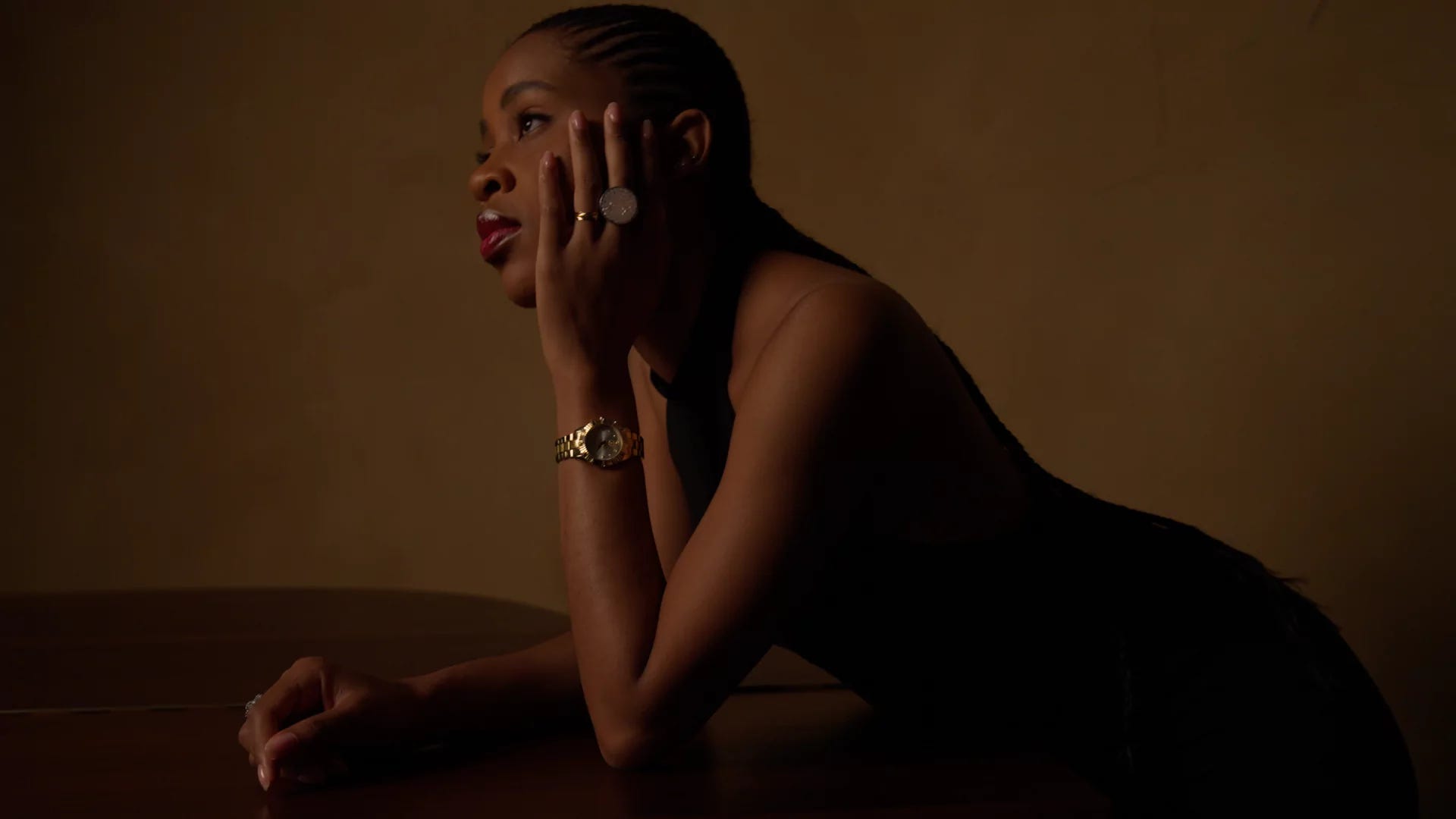
When the notification lands in my inbox for a screening of independent Afro-Belgian filmmaker Rita Afonso’s documentary, The Rift Between Us, there’s no question of whether or not I’d go. As a straight Afrodescendant migrant woman living in Brussels, the film’s premise – examining at misogynoir primarily through the lens of heterosexual relations between black women and men in the Belgian context – is salient for obvious reasons. I also feel some trepidation nonetheless, which only increases as the screening date approaches. This is a very sensitive topic for me. It’s not simply a case of romantic self-interest. To an extent, bizarrely – ironically – I’ve had more affirmation from Black and Black-adjacent men in Belgium than anywhere else I’ve lived. Yet, in various contexts, from the Church to cultural hubs, I’ve also noticed an apparent aversion amongst many Black men to dating women of a similar background. I’ve heard these observations echoed back to me by people of diverse backgrounds, irrespective of gender (albeit, more so from women).
The younger the men are, the stronger this aversion seems to be. Straight Gen-Zed Black men/boys have seemingly bought heavily into Eurocentric standards about what makes an ideal significant other. Evidently, this is not unique to Belgium. I could make similar remarks for the other Western contexts in which I’ve lived – namely, the UK and France – although it seems especially prevalent in Continental Europe. The invisibilisation of Black women in these couplings extends to media; be it your run-of-the-mill advert or a hit TV series like Lupin. At least the UK is streets ahead with this (admittedly limited) representation.
Whilst I’d have no intention of dating someone a generation younger, I still feel the rejection vicariously. My heart goes out to younger Black women. I worry that it’s become a preoccupation of mine. It’s all I can do not to roll my eyes when I see yet another Black/Black adjacent male draped over his European bey, despite several of my own white female friends being – or having been – in such an interracial set-up (of course, I bracket off those relationships because of proximity).
To compensate, I endeavour to focus less on this apparent rejection and pay more attention to positive examples. I’m given to smiling goofily and/or winking at Black couples. I might even voice an encouraging remark to the lovebirds, especially if they’re under-35. It’s the reason that, whatever the merits or perils are of rehashing a classic TV show, the 2026 reboot of A Different World gets a thumbs up for its ample representations of Black-on-Black love.
Before the invectives begin about me being ‘just another bitter Black woman always trying to bring a brother down’ or some kind of Black supremacist, this is not some moral injunction against interracial relationships. My history of infatuations would reveal my own eclectic taste. In the past, colleagues and friends assumed I only had eyes for the melanin-deficient. (In fairness, I became so accustomed to being ignored by darker-skinned Black men my age, I stopped expecting it. It was a novelty whenever I received their attention). My own mother recently expressed doubt about my commitment to Black Love, despite my regular, almost exclusive appreciation for Afrodescendant men of all descriptions.
Thus, whilst this is not a polemic against crossing the colour lines, I do constantly query how much internalised racism shapes the way we the racialised perceive who or what is attractive, including ourselves. I’m aware of the studies about how Black women fare on the dating scene and find the executive summaries already too depressing to delve further. Given that Black women have to contend with the Hydra that is misogynoir – discrimination based on gender and our race – and given the particularities of anti-Black racism, there’s no doubt we pull the short straw repeatedly. I also wonder, in light of Belgium’s particular colonial history, whether it’s prone to its own special variant of fetishising les métis-ses and/or a more explicit association of whiteness with social mobility. Much to my satisfaction, The Rift Between Us broaches many of these same questions.
On arriving at the sold-out screening, I note that the Cinéma Galleries lobby is packed with a multi-racial, mixed-gendered audience queuing up to see Afonso’s film. I knew it would be busy but not to this extent. It’s not a small preview screening either. It reassures that there’s interest in the film beyond the demographic most affected by misogynoir.
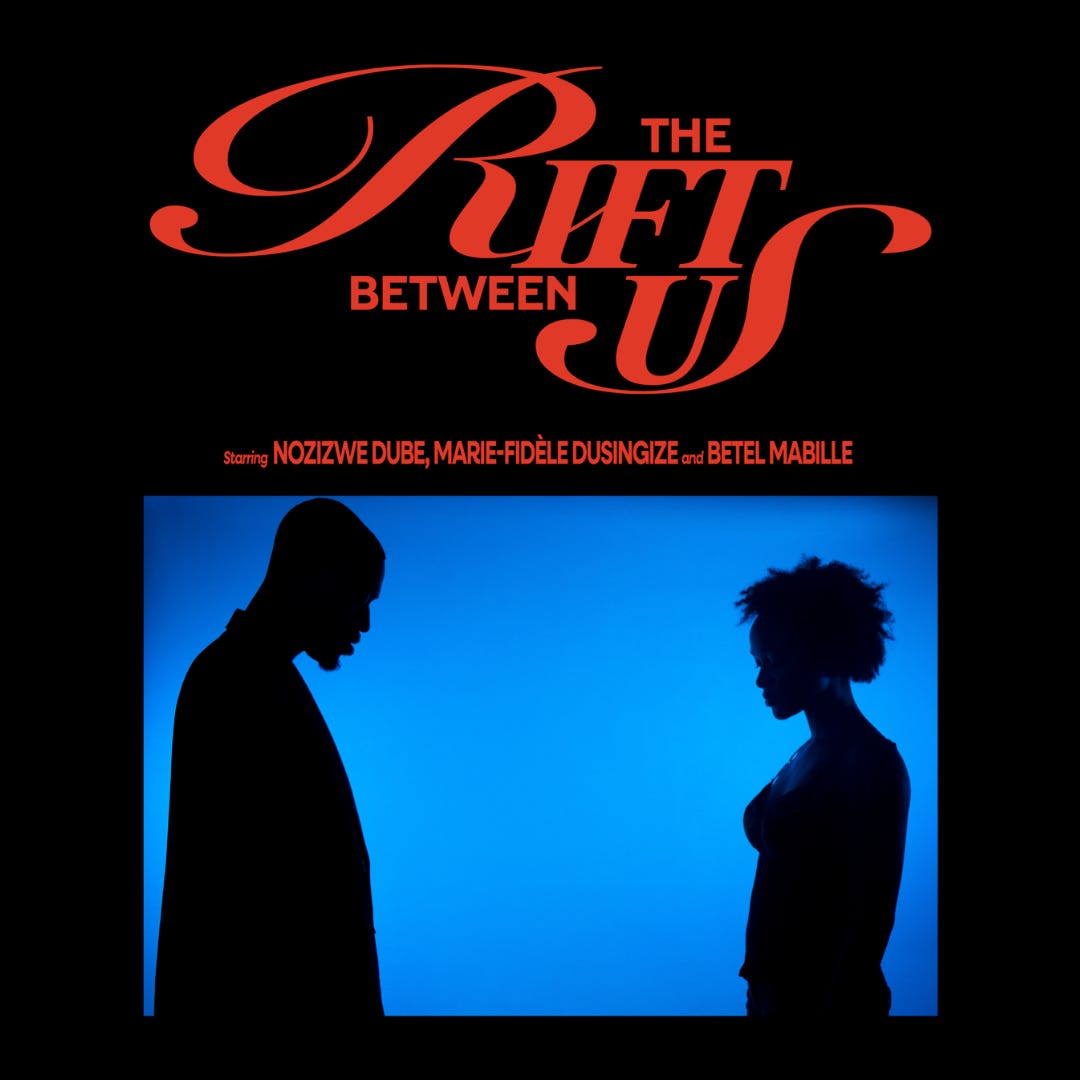
Featuring commentary and research by Afrodescendant women academics Nozizwe Dube, Marie-Fidèle Dusingize and Betel Mabille, this multilingual documentary is the first of its kind in the Belgian context. That bit of trivia speaks volumes. According to Afonso, an academic herself, she originally wanted The Rift Between Us to be the subject of a PhD thesis. When discouraged by the academy on the grounds that it was ‘too niche’, undeterred, Afonso took to making a visual essay.
The film begins with a granular yet accessible exploration of the meaning and provenance of terms such as misogynoir and intersectionality. Echoing the words of renowned activist and legal scholar Kimberlée Crenshaw who coined ‘intersectionality’, Dube insists that it’s not simply about having a multiplicity of identities. Rather it’s about how certain social categories converge to result in oppression because of the discriminatory systems and structures in which they are embedded. The particularities and intensity of this oppression will vary depending on the geographic or social context.
Nevertheless, some patterns emerge. Misogynoir at the macrosocial level flows downstream to sociocultural constructions such as the ‘Angry Black Woman’, any expression of discontent being pathologised as both a racialised and gendered problem. Afrodescendant women are stereotypically presumed to be so endowed with emotional and/or physical prowess, that our expressions of pain and vulnerability are too often overlooked or dismissed. The results can be deadly.
Dube further demonstrates how the denigration of the Black woman reaches beyond the romantic sphere. She points to the now too-familiar dynamic of white (often female) academics who grift off the back of Black intellectual labour, asserting expertise on themes about us but usually without us.
Many of these concepts and phenomena have been so thoroughly discussed in the ‘progressive’ Anglosphere that we all but take it for granted. By contrast, The Rift Between Us suggests these types of conversations are in their relative infancy in Belgium and elsewhere in mainland Europe. My own anecdotal evidence of living in this region for nearly a decade bears this out.
Returning to the central theme of the film, the aforementioned sociocultural distortions feed into how Black women are perceived by Black men as potential romantic interests. Mabille points out repeatedly, with the stats to back her up, that straight Black women largely show a preference for dating Afrodescendant men. By comparison, hetero Black men are less likely to date someone of a similar background. Mabille draws the simple but striking correlation between perceptions of Black women as being more ‘masculine’ than other women and heterosexual male fragility; that is, certain Black men’s fear that their sexual orientation will be called into question unless they pursue women who supposedly meet the (white Western) feminine ideal.
Whereas I’d assume the many Black men who internalise racism towards Black women are in a state of cognitive dissonance, Mabille does not afford them this get-out. She argues that the decision to reject Black women is conscious, evidenced by how defensive and aggressive some of these men become when challenged. Mabille is also dismissive of claims that it’s simply an issue of ‘personal preference’. These tastes are informed by sociocultural norms that the film invites us to (self-)interrogate. Romance is not beyond the political.
Anti-Discrimination EU Law researcher, Dube breaks it down even further. She reflects on how so-called desirability politics manifests in majority Black contexts like Zimbabwe where she grew up, notably through colourism. Dusingize describes how Black women turn the ‘violence inward’ through harmful practices like bleaching. It’s not so much that Black women who go to these extremes want to be white, as much as they want to be the ‘right kind of black’, as observed by a commentator in archival footage. Similar points have been made by Nigerian-American theologian Ekemini Uwan, herself a survivor of self-harm through bleaching.
I can attest that this internalised misogynoir doesn’t have to surface this drastically for it to be just as insidious and damaging. Every time I overly-scrutinise my appearance or that of another Black woman as, to my shame, I even do reflexively to the incredible trio in Afonso’s documentary, it’s a manifestation of that internalised violence turned outwards. It might not be wholly conscious but I – we – must be intentional about combatting it.
As part of the antidote, in The Rift Between Us, Black Love is framed as an act of resistance (resonating with sentiments also expressed by Uwan, again). In contexts marked by colonialism, especially in the Black Atlantic, a key tool of white supremacist regimes has been to undermine Black families, through policies and practices that rupture these units or – in Brazil’s case – increasing immigration from Europe in the hope that it would lead to the ‘phasing out’ of Afrodescendants.
When asked to cite high profile examples of Black Love in contemporary Belgium, Dusingize draws a blank, visibly struggling to recollect. None come to mind. She claims the Black Love movement is more prevalent in the US where these conversations (as in the UK to a degree) tend to be further ahead than in mainland Europe. For there to be a Belgian iteration, the country would first need to admit that its ‘race-blindness’ is a fallacy, Dusingize avers.
The latter portion of the film, as well as the Q&A, are dedicated to ways forward. All the experts elevate the importance of Black female solidarity to help each other in the ‘lifelong fight’, to paraphrase Dusingize, against the internalised white gaze. As lighter-skinned women, both Afonso and Mabille model well this solidarity in their acknowledgement of the particularly vicious permutation of anti-Black racism endured by us dark-skinned sisters.
Nevertheless, Dusingize and Mabille argue that it’s up to Black men to do more of the emotional heavy-lifting. Black women have enough on their plates. As a socio-anthropology researcher, specialising in Afro-identities and systemic racism, Dusingize stresses that she’s acutely aware of the difficulties Western societies throw at Black men. They do nonetheless reap some of the poisoned dividends of patriarchy and can be complicit in reproducing patriarchal violence against Black women. Black men are also perceived – and self-perceive – as being higher up on the racial pecking order. For example, whilst White Supremacist ideology generally hypersexualises Black bodies, Black male aesthetics are perversely revered in the mainstream in a way that Black female forms are not. A quick thought experiment: compare how many darker-skinned Black male celebrity pin-ups there have been relative to dark-skinned women during the past thirty or so years.
During the Q&A, with all present except for Dube, Dusingize reiterates that The Rift Between Us is not a prohibition on mixed-relationships. Nor is it a pity-party for Black women. It’s a call for us to exercise our agency. Afonso believes that transformation begins first with our households and/or intimate relationships.
This represents a tension at the heart of the film and is reflected in a question by a Black male audience member; how can the reparative work be both macrosocial and personal? Mabille responds that it’s not any one individual’s responsibility to dismantle structural inequalities. However, once again, Black men do have an obligation to examine and redress how they benefit from and potentially re-enact systemic oppression against Black women. I would add that white and other non-black women who might consider themselves allies, and yet are also honest enough to acknowledge any tendency to fetishise Black men, have a responsibility to self-examine how they take advantage - unconsciously or otherwise - of this order in which Black women are consistently denigrated.
Marie-Fidèle further warns Black men not to be lured by the false and noxious promises of the manosphere and/or capitalist logics that conflate dignity with material acquisition. Through this distorted lens, women are objectified as reflections (or not) of social mobility.
The panellists, namely Betel, acknowledge the film’s omissions. Given the focus on how misogynoir deforms relations between the sexes, there is no exploration of how Eurocentric beauty standards inform gay relationships for example, although similar hierarchies are observable in the LGBTQ community, adds Mabille.
Considering my apprehension in anticipation of the film, I leave the Cinéma Galleries relieved. Afonso’s cogent and wide-ranging documentary is bold in its claims, whilst handling this delicate, not to mention controversial, subject with the balance and sensitivity that it deserves.
This review also features on Afropean.com